jueves, 4 de abril de 2013

Ciber Cultura.


La cultura no produce cambios pero es donde primero se manifiestan. Como conglomerado de objetos, la cultura es un objeto dinámico, que cambia y muta con el tiempo. Con las TICs, la cultura contemporánea apunta a una fantasía cosmopolita: un mundo donde todos somos diferentes, interactuamos los unos con los otros, nos afectamos y respetamos todos como somos. Un mundo globalizados en los términos  de hoy en día, en donde todos operamos en un mismo espacio nos somete a otras culturas, a diferentes puntos de vista, a la opinión de cada uno y por ende produce en nosotros mayor conocimiento, o al menos tener una idea superficial, más claro de lo que es el mundo y por ende nos respetamos los unos a los otros más.

Pero esta aldea, que más que aldea es un país de individuos, nos ha llevado a involucrarnos más con aquellos que nos gusta por más peculiar que sea, en iniciativas en escala global, todos desde cualquier parte del mundo podemos ayudar a un niños en el Congo víctima de la guerra, o padres infértiles pueden adoptar a un huérfano podre tibetano. Todos estamos expuestos a más y más cosas de más y más lugares.

Las artes en general, tienden a ambientes más interactivos influenciados por los nuevos medios, la hipermedia, el hipertexto y demás han inducido a, por ejemplo, Greenaway a producir experiencias interactivas en el cine, instalaciones con colecciones de videos, banda en vivo y múltiple pantallas. Performances, donde el ambiente es afectado por personas en otros lugares, esculturas interactivas e instalaciones en la nave de máquinas en la Tate de Londres son ahora parte de nuestro mundo.

Las Tics en la cultara ha producido un movimiento mas interactivo, abierto, donde las diferencias son respetadas y cada quien esta con en lo que le provoca y puede.

Ciber Economia


Los interesante de la cibersociedad y las TIC es el hecho de la reducción a cero del tiempo y las distancias, como ya hemos dicho antes, -Pero que significa esto en la economía? Como se manifiesta esto en el ambiente que las impulsa, porque sin lugar a dudas, las TIC son hijas de la economía actual.

No tiempo y no distancias, implica más eficiencia y un radio de afectación mayor.  Es decir, la economía se ha hecho más eficiente, global y competitiva. El ambiente virtual nos permite existir en múltiples locaciones pese a estar en un solo lugar, atomizar los procesos en pequeños núcleos en donde me sea más rentable.Ejemplos de esto abundan: tercerización de servicios que las empresas americanas hacen en la India, es un caso icónico y a gran escala. Apple por ejemplo, desarrolla y diseña sus productos en California, pero los fabrica en china.

En la pequeña, cosas como el teletrabajo son posibles, pero mucho más interesante por lo que implican: son trabajos especializados que se dedican a algo específico que más nadie puede hacer y que en principio trabajan para múltiples compañías, en diferentes partes del mundo haciendo en cualquier parte del planeta, de esta manera, y tal vez el ejemplo más claro, son los corredores de bolsa de valores, que en teoría, pueden operar desde cualquier parte de mundo en cualquier mercado, así por ejemplo, yo puedo transar operaciones en New York, Londres, Paris, Frankfort y Tokio en el mismo día desde mi casa en caracas para clientes en cualquier parte del mundo.

Esto lo que provoca y es provocado por un mercado mas integrado y único. Los mercados bursátiles son de nuevo un buen ejemplo, el cierre en Tokio, el primero en ocurrir tiene repercusiones en el siguiente, en un efecto de bola de nieve que termina en New York. Igualmente, una prostesta en Nijgeria afecta los precios en tiempo real del petrolio venezolano.
Pero no solo mercardo mas integrados, las TIC han producido una explosión por la búsqueda de la eficiencia. Los trabajos se puede dicicar efectivamente a mas cosas en menor tiempo, pero también gracias a ellas, sobre todo en el área de servicios: Telebanca, servicios oficiales, tramites y registros, etc., todos lo procesos que implique base de datos en general.
El cambio de la economia con las TICs ha producido en general un cambio de orientación, ya no es importante la producción de objetos o la extracción de materia primas; en cambio ahora, la economia se orienta a servicios, diseño, gerencia, elementos mas enfocados a uso, manejo y producción de información y no de productos.

Presentacion Cibersociedad

Aquí les dejamos el link para nuestra presentación en prezi de la cibersociedad

El ojo bionico

A lo largo de la materia hemos hablado de los avances tecnológicos y como afectan ellos a la sociedad. Aquí les dejo una noticia acerca del ojo biónico que fue desarrollado hace poco, esto es equivalente a abrir un nuevo mundo para las personas discapacitadas de la vista.

El Boston Retinal Implant Project es uno de los 22 programas alrededor del mundo dedicados a tratar de devolver la vista a quien la perdió a causa de enfermedades. Se trata de un chip, que iría implantado detrás del globo ocular y serviría como un transmisor de luz al cerebro. Por este motivo, esta tecnología sólo podría aplicarse a personas cuyos nervios ópticos estén en buen estado y sean funcionales. De este modo, no es posible aplicarlo a pacientes ciegos de nacimiento o a quienes sufren de glaucoma.

El ojo biónico está pensado para mejorar la calidad de vida de aquellos que perdieron la vista permitiéndoles, por ejemplo, ver formas generales y obstáculos en su camino. Serviría para que puedan moverse solos, pero no mucho más, dado que aún su calidad es bastante limitada. Se trata de una tecnología aún en desarrollo, y se espera que llegue permitir reconocer objetos, rostros o algunos detalles generales, pero por el momento hay que conformarse con devolver al paciente la confianza para moverse solo.

Otra muestra del prototipo de implante ocular                                              Otra muestra del prototipo de implante ocular

http://www.neoteo.com/el-ojo-bionico-un-nuevo-implante-para-ciegos

martes, 2 de abril de 2013

FT en la era Digital.

Esto es interesante y es a lo que me refiero, Finacial Times, con 150 años de historia, no ha tenido que cambiar demasiado para sobrevivir en la era digital sino adaptarse a los nuevos medio y dedicarse a lo que es bueno y por lo que es famoso, prensa altamente especializada de gran calidad. Y lo unico que ha cambiado es el modo en que el producto es entregado. ahora se concentran en suscripciones fisicas y/o digitales, con mas contenido especializado en las necesidades de los lectores y los tiempo en que ellos trabajan. Lo que han hecho no es reinventar el agua caliente, sino interacturar con sus suscriptores y crear contenidos y medio que los satisfagan basados en sus necesidades y lo que el periodico puede hacer.

Nota Completa de Mashable.com

The 'Financial Times' Has a Secret Weapon: Data

For more than a century, publishers knew very little about their audiences: who they were, their interests and professions, or what other materials they were reading. Since newspapers went online two decades ago — The New York Times, The Wall Street Journal and the Financial Times all launched websites between 1995 and 1996 — publishers have been amassing a great deal of data about them, data the 125-year-old FT is using to hit record subscription levels and make its advertising products more competitive, its CEO says.

The FT enjoys a distinguished role in the sphere of financial news publications, namely for its commentary on UK and European markets and businesses, as well, of course, for the salmon pink tint of its print newspaper. Headquartered in London and edited by Lionel Barber, it employs more than 600 journalists worldwide and has an average daily readership of 2.1 million, a little less than the Wall Street Journal (though a subscription is about a quarter more expensive).

The paper finished 2012 with a record paid circulation of 602,000, up 28% from five years ago. For the first time, the number of digital subscriptions surpassed print at 316,000 versus 286,000.

Despite the increase in FT subscriptions — which start at $352 per year for digital-only access — the FT Group is only thinly profitable: Last year, the Group (a division that includes the FT as well as intelligence service Mergermarket and a 50% stake in The Economist Group, among other holdings) reported 11% operating profit on revenues of $568 million. In November, Bloomberg reported the division was up sale, but parent company Pearson quickly and repeatedly denied the report.
Using a Paywall to Gather Audience Data

Like other print publications, those that make up the FT Group have suffered from the general decline in print advertising revenue for the past decade and a half. Digital and mobile advertising have stemmed only some of the bleed, but in the last few years growth has come to a near standstill: In 2012, U.S. newspapers' digital ad revenue only grew by about 3%, according to the Newspaper Association of America.

Since advertisers can no longer support them, publishers have looked to readers for revenue growth and profit, sparking the rapid adoption of online paywalls beginning with the New York Times in 2011. The Alliance for Audited Media estimates that nearly half of U.S. newspapers now have some sort of paywall or metered access model.

The FT was well ahead of this trend, introducing a metered access model in 2007. Today, subscriptions make up more than half of the FT Group's revenue, while advertising only accounts for 39%, down from 52% in 2008. At the FT specifically, advertising once made up as much as 70% of yearly revenue. This year, the paper expects to generate more money from subscriptions than from advertising.

"That's a big deal in the transformation of our business model," John Ridding, CEO of the FT, said in a sit-down interview at Pearson's U.S. headquarters last month. Ridding (pictured top) joined the FT from the editorial side, reporting abroad from Paris and Korea before taking on a series of executive positions, including editor and publisher of FT Asia. He was named chief executive of the paper in 2006, assuming the CEO role of the entire FT Group for the first time this month.

I asked Ridding how the FT was able to increase its subscriber levels by more than a quarter in the last five years. "It's sort of a combination of art and science," he says. "Five or six years ago we started a new media model, charging for access through a metered system. When we started doing that, it was primarily to build a revenue stream online, but probably what was more important over time was the data and customer insight that that gave us. That's what transformed the business," he says.

Looking through some of the reader data — the FT's data team now numbers more than 30 across three groups — the FT was able to recognize the kinds of patterns readers display before purchasing subscriptions. "We would see the sort of articles they were reading and the frequency they were reading those articles, for instance, and we began to map those," Ridding explains. "People do behave in predictable ways."

While online paywalls are often perceived as a way to keep non-paying readers out, the FT has viewed them as a way to bring new readers in.

While online paywalls are often perceived as a way to keep non-paying readers out, the FT has viewed them as a way to bring new readers in. The FT.com asks users to register to read up to eight articles per month for free. It's here that the FT collects much of its information. Registrants — there are more than 5 million of them — are required to declare their e-mail, zip code, industry, job responsibility and position level. Those who register are, of course, more likely to become full subscribers in the future.

Ridding says the data-driven approach is transforming its marketing and advertising, too. The data collected from registrants allows advertisers to target campaigns to, say, executives in the U.S. aerospace industry, or HR department heads in India. Added to this is a proprietary reporting tool called Deep View, which offers "the most" insight into advertising campaigns and how they perform compared to its competitors', the FT says. (One media buying manager we spoke to confirmed this assessment, noting it is only available for direct, and not programmatic, ad buys.) During and after campaigns, advertisers can see who has seen or clicked on a campaign, and the optional placement and time of days to run the ads, "giving them the option to reassess mid-campaign, switch creative and retarget," a spokesperson explains.

"We can prove in real-time quite effectively what advertising is working and put that data in front of advertisers," says Ridding. "Marketers have to justify every cent of what [they're] spending. Our job is to provide the tools and information to justify that decision for running a campaign with the FT rather than anyone else." Technology companies like Google and Twitter, as well as publications like The New York Times, already offer live reporting capabilities, but the demographic data (industry, job title, etc.) is particularly unique, the buyer observed.

Data's Role in Editorial

Since enforcing on-site registration, the FT has gathered not only a vast amount of data about who its readers are and how to sell subscriptions and ads to them — the paper also knows a good deal about what they read and when, as well as the kinds of editorial products that appeal to them.

The FT's newsroom is still tethered to the rhythms of the daily print cycle, working evening shifts and publishing the vast majority of its stories early morning UK time. But traffic levels, which are highest during the day, suggest readers are looking for fresh information beyond the early morning hours.

"The FT has been around 125 years, and a lot of the process and structure that has built up over that time no longer reflects the needs of our readers," Ridding observes. "The core of our 'digital first' initiative is really moving resources to front-end digital editing and publishing. We're moving more staff from nighttime to daytime, deploying our energy and resources and at the times our readers want it."

As part of a move away from this cycle, Lionel Barber, editor of the FT, announced in January that 25 staff positions would be eliminated, and 10 more people would be hired to fill digital roles. In a memo e-mailed to staff, Barber said the FT needs to serve a digital platform first, and a newspaper second.

That doesn't mean the FT is moving towards becoming a 24/7 wire service. "We're never going to be a wire service, that's not our job, not what makes us different and special," says Ridding. "Nevertheless, I think what people want is to go to any of our channels at any time, and find what the editorial brain thinks is the most significant story at that time." He adds, "Things evolve and change and happen during the business day. We have to be reflecting those changes."

To help deliver on that mission, the FT is planning to release a new online section called "Fast FT," which will provide real-time market commentary around the clock. Ridding emphasizes (again) that it's not a wire service, seeking instead to deliver analysis and context to the news, not just the news itself.

Ridding says the FT is also focused on connecting with readers, building and deepening the communities that form around its content. "A lot of our readers are serious experts in their fields. We want to create really high-level, informed conversations with them and us."

To do that, Ridding and his team are developing a series of tools to share and discuss content. One, called FT Newslines, is a premium service that allows business school professors and students to create and share annotations in the margins of articles, bringing together insight from a single professor or class, or across a range of experts from different schools, depending on users' individual settings.

One data area the FT is cautious in monitoring is pageviews. Ridding says the organization is "aware" of traffic numbers, but believes their importance is sometimes overweighted. "Our industry got itself into all sorts of problems focusing on reach alone,"he says. "Broad measures of traffic don't cut it in our world. Depth of our relationship, frequency of visits, readership, return on those readers... [That's] what advertisers and more sophisticated players are increasingly [focused on]."

"That being said, when we see a particular resource getting a lot of attention, like commodities over the past few years, it helps us make decisions about [coverage] in different sectors," he adds. "But we have to be very careful. People subscribe and read because they want trusted judgment of experienced editors. For us that's what the FT stands for, that will never change."

The data the FT has collected and analyzed through its metered access paywall has affected its business in myriad ways, helping the organization find sources of new revenue (subscriptions) in a weak and volatile ad market, improved the targeting and reporting of its ad products, and informed the development of new editorial offerings. But in some areas — like traffic — data can only inform so far; for the rest, the FT must rely on the news judgment that made it prominent in the first place.

lunes, 1 de abril de 2013

Nuestros antepasados también tenían redes sociales


Ciertamente no eran  Facebook, Twitter or Instagram, pero en nuestros antepasados compartian sus costumbres, eventos y personalidades a través de ceramicas y otros objetos grabados y que circulaban entre las tribus en grandes regiones al sur de Estados Unidos. Los arqueologos encontraron similitudes entres ceramicas en lugares distantes, lo que prodria indicar que poseian una menera de comunicarse y compartian costumbres. 


"Fabricaban, usaban y descartaban piezas muy similares en grandes espacios, lo que significa que muchas de sus prácticas diarias eran las mismas", dijo Mills."Esto no se da por casualidad; viene de la interacción, el tipo de interacción que no sólo es un simple intercambio, sino una relación entre personas que aprenden cómo usar y descartar distintos tipos de cerámica".

Nota completa de la BBCMundo.com

Nuestros antepasados también tenían redes sociales

Mucho antes del advenimiento de internet y de la invención de Twitter o Facebook, nuestros antepasados ya contaban con redes sociales que les permitían mantener vínculos con personas a cientos de kilómetros de distancia, aseguran antropólogos de la Universidad de Arizona, en Estados Unidos.

Esta conclusión se basa en el análisis de miles de restos de cerámica y obsidiana elaboradas por comunidades prehispánicas de Arizona y Nuevo México, que -según dicen los investigadores- demostraron fuertes conexiones entre sí.

Segán afirman, esto sugiere que, lejos de lo que pensaban muchos arqueólogos, las redes sociales de estas comunidades eran lo suficientemente sofisticadas como para no limitarse a asentamientos cercanos.
Interacción cultural

El equipo, liderado por la antropóloga Barbara Mills, se basó en el análisis de más de 800.000 piezas de cerámica y 4.800 piezas de obsidiana hallados en 700 yacimientos en Arizona y el oeste de Nuevo México.

Los antropólogos descubrieron que existían muchas similitudes en el dibujo de las piezas de cerámica a pesar de encontrarse a unos 200 kilómetros de distancia, lo que sugiere que podían mantener relaciones con comunidades lejanas. 

"Fabricaban, usaban y descartaban piezas muy similares en grandes espacios, lo que significa que muchas de sus prácticas diarias eran las mismas", dijo Mills.

"Esto no se da por casualidad; viene de la interacción, el tipo de interacción que no sólo es un simple intercambio, sino una relación entre personas que aprenden cómo usar y descartar distintos tipos de cerámica".

Según expresó Mills, esta idea sorprendió mucho al equipo, ya que estos grupos sólo contaban con sus pies para caminar y conectarse con otras comunidades.

Pero el análisis de las piezas permitió a los investigadores identificar una fuerte dinámica entre nodos sociales (individuos, hogares y asentamientos).

"Estábamos al tanto de los cambios demográficos, dónde vivía la gente y dónde emigraban, pero no sabíamos cómo cambiaban las redes sociales", observó la antropóloga.
Nueva perspectiva arqueológica

Mills afirmó que lo que descubrieron de estas interacciones es que existía una fuerte red social entre las comunidades sureñas de la región bajo estudio, pero que terminó colapsando. Mientras que las comunidades del norte tenían una estructura de vínculos más fragmentada, que se perpetuó en el tiempo.

"Hay ciclos de crecimiento y colapso de las redes sociales cuando las analizamos en el transcurso de los siglos. Los mundos más conectados pueden volverse más fragmentados", observó.

Ronald Breiger, colaborador de Mills y experto en análisis de redes sociales, añadió que el análisis de los vínculos podría tener importantes implicaciones a la hora de entender la vida de nuestros antepasados.

"Bárbara y su grupo son pioneros a la hora de traer la perspectiva de las redes sociales a la arqueología y las sociedades antiguas", explicó Breiger.

"Unir el análisis espacial y de redes sociales al uso de objetos para hablar de su cultura es la dirección a la que, veo, se dirige el análisis de las redes sociales".

El trabajo fue publicado en la revista especializada Proceedings of the National Academy of Sciences.

Siga la sección de tecnología de BBC Mundo a través de clic
@un_mundo_feliz


Realidad Aumentada. 

Mas real que la realidad. 


Esto puede ser la nueva manera de consevir el universo, donde el entorno esta totalmente mediado por especialistas, tendencias y medio de comunicacion. Este es una version del proyecto lanzado por Google hace poco. Genial pero algo aterrador. Aqui la nota por Lois P Farlo en theGuardian.
el Video aqui.

Guardian launches 'augmented reality' specs to offer immersive liberal insight

Guardian Goggles' anti-bigotry technology will automatically redact columns by Melanie Phillips or Richard Littlejohn

You can already access the Guardian in ways that were unimaginable two decades ago: on your desktop or laptop computer, a tablet, e-reader or smartphone.


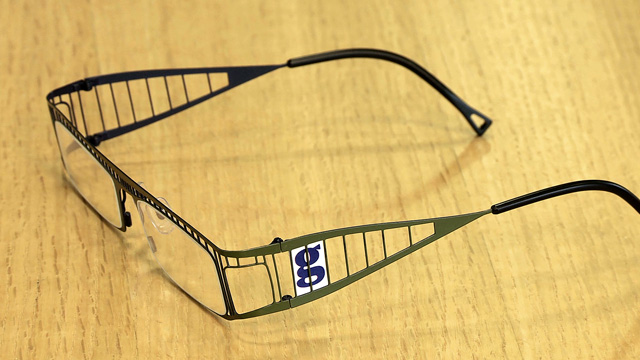
But today, ending months of speculation and rumour, this newspaper announces a groundbreaking development in the modern history of the media: a pair of web-connected "augmented reality" spectacles that will beam its journalism directly into the wearer's visual field, enabling users to see the world through the Guardian's eyes at all times.


The motion-sensitive spectacles, known as Guardian Goggles, incorporate translucent screens in the lenses, overlaying the wearer's view of their surroundings with a real-time stream of specially curated opinions from the paper's reporters, critics and commentators. For example, simply by looking at the outside of a restaurant or cinema and pointing, the user can call up relevant Guardian reviews of the food or current films.


"For some time, our users have been telling us they want an even more immersive Guardian experience, without the hassle of having to reach for their phones, or switch on their iPads, and Guardian Goggles are the answer," a spokesperson said.


"Now, when you're out shopping, you needn't have memorised our recent features on ethically sourced foods. Just call up the 'Mini-Monbiot' app, and the products you're looking at will be rated in front of your eyes."


Related software can detect the destinations featured in holiday brochures, warning wearers before they book trips to countries with problematic human rights records.


The spectacles also feature optional built-in anti-bigotry technology, which prevents exposure to non-Guardian opinions by blacking out columns by Melanie Phillips or Richard Littlejohn, among other writers, as soon as the user attempts to look at them.


Media analysts predicted that the Goggles could have a tectonic effect on the media landscape. "This is the easily biggest development in news technology since newspapers opened 'virtual bureaus' in Second Life in 2006, transforming journalism forever," said Paul McMullan, the former tabloid journalist who is now Professor of Disruptive Thinkovation at City University in London. "I frankly wouldn't be surprised if this were an even bigger success than Google+."


Another Goggles app, currently in development, will allow readers with strong feelings about postings on the Guardian's Comment Is Free site simply to yell their objections out loud, for example in the street, or on a bus. A voice-recognition system will then add their opinions to the relevant web page within 30 seconds.


An algorithm designed to detect frequently recurring viewpoints -- for example, that the Guardian should not be wasting valuable internet space by running blog posts about fashion or celebrities -- will enable those to be added to the site even faster.


A still more ambitious project could see the G2 columnist and psychotherapist Pamela Stephenson Connolly delivering sex-related advice in real time.


A limited-edition designer model, evoking the shape of the letter "g" from the Guardian's masthead, has been specially created by a collective of avant-garde designers working in association with Christopher Biggins.


Already the glasses, a limited number of which have been given to prominent public figures for testing, have attracted a number of high-profile fans, including at least one cabinet minister. Meanwhile, a spokesman for St James's Palace said both the Duke and Duchess of Cambridge were enjoying using the product, despite Prince William's grandfather, the Duke of Edinburgh, suggesting that they "looked like they'd been put together by an Algerian."


Guardian Goggles' impressive battery life enables them to be used for up to three hours at a time. To facilitate easy recharging for even longer periods of use, the paper plans to place unobtrusive charging stations on street corners in parts of London, Brighton and Bristol, where users may plug in their glasses without even needing to remove them.


It is not yet understood how glasses-based immersive journalism will be handled by the emerging new regulatory framework for the UK media. But Hugh Grant said he would issue an authoritative ruling on the question within the next two weeks.


Google Glass, a wearable-technology project blatantly inspired by Guardian Goggles, but with added features enabling the user to make creepy surreptitious video recordings in coffee shops, is expected to go on sale to consumers in 2014.

Articulo 
http://www.guardian.co.uk/media/2013/apr/01/guardian-goggles-augmented-reality-specs